Big bounty for llama.cpp, small improvement for sd.cpp
Same GPU, same maths library, same missing +1 in a
threadgroup stride. In llama.cpp it is worth a large multiple of prompt-processing speed and
takes a real agent task down to about half its time. In stable-diffusion.cpp the identical
kernel got 4× faster and the picture arrived in the same time — because a diffusion step spends
most of its seconds where no matrix tile can reach.
the defect
A row of 64 floats is 256 bytes
Threadgroup memory is served in 32 banks of 4 bytes, cycling every 128 bytes. A dense
float sA[BM][BK] with BK=64 puts one row every 256
bytes — a multiple of the cycle — so every lane reading sA[row][k] with the
same k asks for the same bank and queues. Rows starting 65 floats apart
spread across banks.
Both programs hit it, because both use ggml, and on this card ggml's own tiled GEMM is gated off
(has_simdgroup_mm = false), so each wrote a tile by hand — and each wrote it
dense.
llama.cpp · the bounty
A different order of magnitude
In llama.cpp the same fix is worth several times the prompt-processing throughput, and it halves a
real agent task — a file read, a tool call and an answer. That is a large enough result to stand on
its own, so its measurements, its patch and its task are kept for a chapter rather than spent here.
What this post uses from it is only the shape: where the tile is the workload, it pays; where the
tile is a guest, it does not. Everything measured below is stable-diffusion.cpp.
sd.cpp · the small improvement
Same patch, 1.4% — and identical pixels
SD 2.1, 20 steps, seed 42, “a photo of a cat”. Pixel diff between the two renders:
max channel difference 0.
dense · 2.86 s/it
padded · 2.82 s/it
Identical, not “close”. A pure addressing change must produce this — and it is how
you know a rebuild actually shipped.
why the difference
Two thirds of a render is not sampling
One step costs 2.86 s; a one-step run finishes in 31 s
warm, so ~30 s is fixed cost per process: 5.2 GB of weights plus the VAE decode.
So the tile touches less than half of a render, and inside that half it is evidently a small share.
In llama.cpp the tile is the workload — which is the whole difference.
what it costs you either way
5.2 Wh per 512×512 image
Four renders, same recipe, measured at the GPU rail: 5.23–5.27 Wh each, 80–84 s wall once
weights are warm. The text side is a different currency: 66 s of your time per agent task.
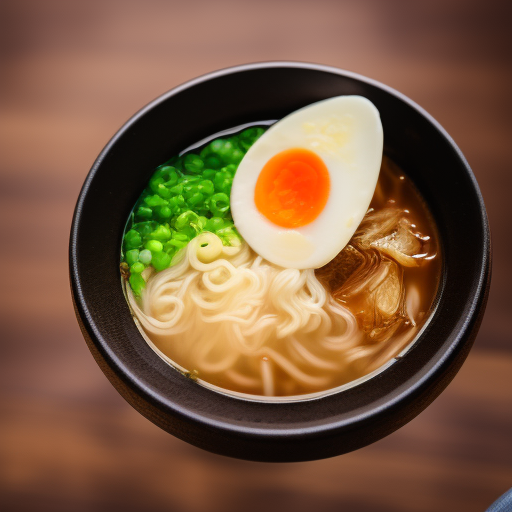
“a red bicycle leaning against a brick wall, morning light” · 84 s · 5.27 Wh“an astronaut riding a horse on the moon, digital art” · 81 s · 5.23 Wh“a bowl of ramen with steam, close up, food photography” · 80 s · 5.24 Wh“a photo of a cat” · 2.83 s/it warm · 5.23 Wh
0003-simt-padding.py applies all eight to stable-diffusion.cpp, each
anchored to an exact match. llama.cpp's version is the same idea with a 64×64 tile and a dequantising
prologue.
what this does not claim
Honest boundaries
It does not claim images got faster — they did not, and that is reported, not buried. It does claim
one defect, two payoffs, measured on the same card: a 3.2× prefill where the tile is the workload, and
1.4% where it is a guest.